
Laboratory SERIES
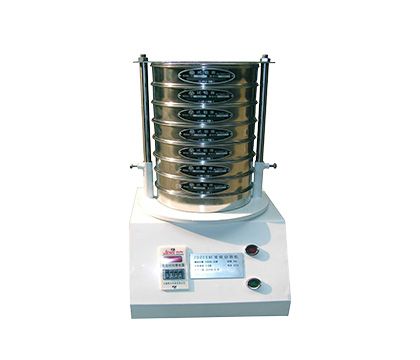
Laboratory Sieve Shaker
Choose the shaker and sieve stack together for the sample, particle-size method and reporting requirements.
Equipment selection starts with your material, target separation and process conditions.
01
How the particle-size analysis process works
A stack of test sieves separates a representative sample into fractions. The shaker movement, sieve-frame compatibility and test method must be considered as a complete measurement setup.
02
Select the sieve stack before the drive setting
For the laboratory sieve shaker, start with the test-sieve diameter, frame heights, lid, receiver and clamping arrangement. The catalogue lists vibration, amplitude and timing entries; these are instrument references, not evidence that a tapping procedure or a particular analytical standard is supported.
- Supply the laboratory procedure and the intended dry or wet method.
- Ask which movement and controls the offered instrument actually provides.
03
Choose the test method and sieve stack together
A laboratory shaker is the drive instrument; test sieves, lid and receiver define the stack used for the analysis. Start with the intended method, sample characteristics and sieve-frame dimensions. A laboratory result cannot be transferred directly into an industrial screening-capacity guarantee.
- State the test method and whether the procedure is dry or wet.
- List sieve diameters, frame heights and number of sieves.
- Describe the sample mass and any tendency to agglomerate.
04
Make the analysis repeatable
A useful sieve analysis records the sample preparation, sieve identification, operating time and mass retained on each sieve. Verify clamping and accessory compatibility against the actual instrument. Timing and motion settings should be established by the applicable method and material, not selected only to obtain a faster result.
- Retain calibration or verification records for the test sieves where required.
- Agree a weighing and material-recovery procedure.
- Ask whether any wet-sieving or cleaning accessory is actually supported.
05
Ultrasonic and wet-sieving configurations require confirmation
If the requirement is an ultrasonic laboratory sieve shaker, identify the analytical method, sieve stack and compatible assistance system. An industrial ultrasonic screen and a laboratory shaker are different equipment contexts. Confirm any ultrasonic or wet-sieving configuration for the actual offered instrument; it is not established as a standard option by this page.
06
A tapping requirement needs its own instrument check
When the procedure calls for tapping, compare the dedicated tapping-series documentation instead of assuming that a sieve stack fitting this shaker makes the motions equivalent. For a compound-motion enquiry, ask which movements the separate inspection series supports.
CONFIGURATION REVIEW
Specify the machine for the task.
| Selection item | Information to confirm |
|---|---|
| Sieve-stack fit | Provide sieve-frame diameter, frame heights, lid and receiver so the clamp and stack can be checked together. |
| Vibration and timer reference | Match the vibration, amplitude and timer entries to the quoted instrument manual; select operating conditions through the required method. |
| Recovered sample distribution | Record sample preparation and mass retained on the identified sieves, including material left in the lid and receiver. |
| Method-specific accessories | Request explicit support for the proposed wet or ultrasonic accessory; the laboratory shaker listing does not make either a standard supply item. |
Final technical values, dimensions and performance conditions are confirmed against the proposed equipment and application.
TECHNICAL DATA
Models & specifications
| Item | Catalogue value | Unit |
|---|---|---|
| Sieve diameter | 200 | mm |
| Sieve layers | 5 | layers |
| Vibration frequency | 1400 | n/min |
| Amplitude | 1–4 | mm |
| Excitation force | 1–4 | kN |
| Motor power | 0.12 | kW |
| Overall dimensions | 355×305×650 | mm |
| Timer | 1–15 | min |
Catalogue dimensions and options. The supplied configuration is specified in the quotation.
Laboratory Sieve Shaker
DISCUSS
YOUR TASK
Let's review the application.
Provide the material, separation target and process requirements so that the equipment configuration can be discussed.