
Laboratory SERIES
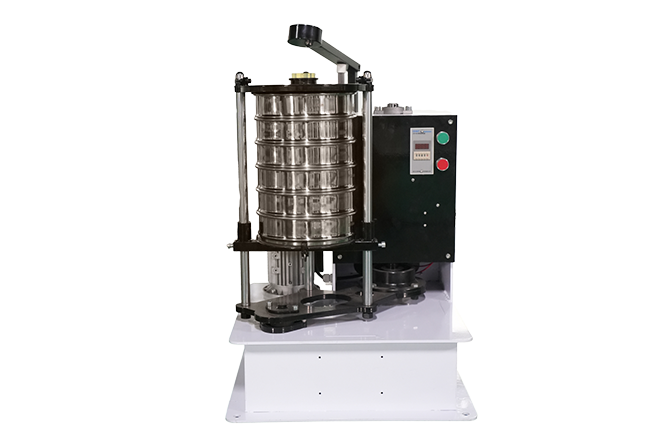
Laboratory Tapping Screen
Evaluate the tapping movement, sieve stack and sample method as one laboratory testing arrangement.
Equipment selection starts with your material, target separation and process conditions.
01
How the tapping sieve analysis process works
The laboratory tapping series is selected against its documented movement and compatible test sieves. Confirm the sample method and instrument configuration rather than treating a third-party brand name as a generic model.
02
Review the shaking and tapping actions separately
The tapping-series description includes side-to-side movement and a hammer action on the sieve stack. Its catalogue distinguishes revolutions, taps and tap height. Use those separate entries when checking the specified laboratory procedure; a vibration-only selection does not establish the same mechanical action.
- Identify whether the method requires tapping and how the sample responds to handling.
- Ask for the model-specific movement, hammer and stop-control documentation.
03
Match tapping action to the required method
A tapping laboratory shaker applies a different mechanical action from a vibration-only instrument. Start with the analytical procedure and the sensitivity of the sample to handling. The ability to accept a sieve stack does not establish compliance with every laboratory test standard.
- List the test method, sieve frame diameter and stack height.
- Explain whether the sample is fragile or prone to packing.
- Request the actual tapping and movement specifications for the model.
04
Keep timing and sample recovery controlled
Check the clamp, lid, receiver and stop controls before a method is agreed. Repeatability depends on preparation, retained mass measurement and a consistent endpoint as well as instrument motion. No fixed sieving time should be treated as suitable for every sample.
- Document the sieve identifiers and weighing arrangement.
- Ask for inspection and maintenance instructions specific to the drive.
- Confirm supported accessories rather than assuming wet operation or ultrasonic capability.
05
Compare the action, not just the sieve diameter
The laboratory sieve shaker and the tapping series may be discussed for similar sieve-analysis tasks, but a matching frame diameter is not a method-equivalence certificate. Choose the required action from the procedure and confirm the fixture for the proposed tapping instrument.
CONFIGURATION REVIEW
Specify the machine for the task.
| Selection item | Information to confirm |
|---|---|
| Shaking and hammer action | Check the separately listed revolution, tapping and tap-height entries against the offered model and the analytical procedure. |
| Stack under tapping | Confirm sieve frames, total stack height, clamp, lid and receiver with the proposed tapping fixture. |
| Timing and sample condition | Agree the run endpoint and recovery procedure; describe fragile particles or packing so the laboratory method can be reviewed. |
| Drive-specific records | Request the tapping-drive inspection and maintenance instructions; do not substitute another instrument brand or assume every test standard is covered. |
Final technical values, dimensions and performance conditions are confirmed against the proposed equipment and application.
TECHNICAL DATA
Models & specifications
| Item | Catalogue value | Unit |
|---|---|---|
| Sieve diameter | 200 | mm |
| Sieve layers | 7 | layers |
| Revolutions | 290±6 | rpm |
| Taps | 156±3 | tpm |
| Tap height | 38±6 | mm |
| Rotation stroke | 25 | mm |
| Motor power | 0.37 | kW |
| Overall dimensions | 500×650×700 | mm |
| Weight | 130 | kg |
Catalogue dimensions and options. The supplied configuration is specified in the quotation.
Laboratory Tapping Screen
DISCUSS
YOUR TASK
Let's review the application.
Provide the material, separation target and process requirements so that the equipment configuration can be discussed.