
Inspection SERIES
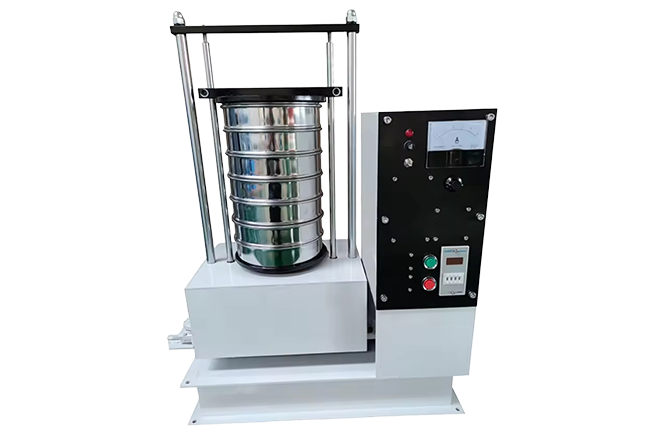
Magnetic Levitation Inspection Screen
Discuss the inspection method, sample and sieve-stack configuration before selecting this laboratory series.
Equipment selection starts with your material, target separation and process conditions.
01
How the laboratory inspection screening process works
The drive configuration and motion must be confirmed against the actual instrument documentation. Select the inspection screen as part of a defined sampling and particle-size analysis method.
02
Resolve the compound-motion configuration
This catalogue lists rocking, reciprocating and vibration entries. Ask which movements the quoted instrument actually provides and how they are selected or combined. The archived description also uses different drive terminology, so the current manual and drawing are needed before specifying the drive.
- Request the current model identification and motion/control description.
- Treat the listed motion entries as catalogue references, not proof of independent controls.
03
Verify the motion and analytical purpose
Choose the intended laboratory analysis method and confirm the compound-motion settings of the quoted instrument. This is a laboratory screening instrument; the product name does not describe magnetic separation of the sample.
- Clarify the sample-analysis method and its endpoint.
- Confirm which motions can be selected on the quoted instrument.
- Match sieve dimensions and stack limits to the current drawing.
04
Compare the recovered fractions
For fine or cohesive samples, examine material remaining on the frame, receiver and lid as well as sieve retention. Record the preparation and run conditions so an apparent change in distribution is not mistaken for better analytical accuracy.
- Provide sample characteristics and the intended weighing procedure.
- Ask for instrument controls and accessory compatibility documentation.
- Do not assume ultrasonic, wet-sieving or calibration functions from the product name.
05
Keep the laboratory purpose distinct from magnetic separation
The product name identifies a laboratory inspection series; it does not establish removal of magnetic particles from a process stream. Compare this series with the sieve shaker or tapping instrument by the documented analysis method and supported movements, without assuming an accuracy advantage from the name.
CONFIGURATION REVIEW
Specify the machine for the task.
| Selection item | Information to confirm |
|---|---|
| Documented combination of motions | Use the rocking, reciprocating and vibration entries to request the actual movement sequence and available controls for the quoted instrument. |
| Frame and adapter identification | Confirm the selected sieve-frame size, adapter, clamp and stack limit against the current drawing; a list of catalogue sizes does not prove every supplied fixture. |
| Sample recovery across movements | Record the chosen movement conditions and material retained on frames, lid and receiver before comparing recovered fractions. |
| Drive description and supported functions | Resolve the archived drive terminology using the manufacturer manual; ultrasonic, wet-sieving, calibration and magnetic-separation functions are not established by the series name. |
Final technical values, dimensions and performance conditions are confirmed against the proposed equipment and application.
TECHNICAL DATA
Models & specifications
| Item | Catalogue value | Unit |
|---|---|---|
| Sieve diameters | 200 / 100 / 75 | mm |
| Screen decks | 1–8 | layers |
| Rocking frequency | 290 | times/min |
| Reciprocating stroke | 25 | mm |
| Reciprocating frequency | 290 | times/min |
| Vibration frequency | 3000 | times/min |
| Amplitude | 0–3 | mm |
| Motor power | 0.37 | kW |
| Overall dimensions | 660×470×800 | mm |
| Weight | 105 | kg |
Catalogue dimensions and options. The supplied configuration is specified in the quotation.
Magnetic Levitation Inspection Screen
DISCUSS
YOUR TASK
Let's review the application.
Provide the material, separation target and process requirements so that the equipment configuration can be discussed.